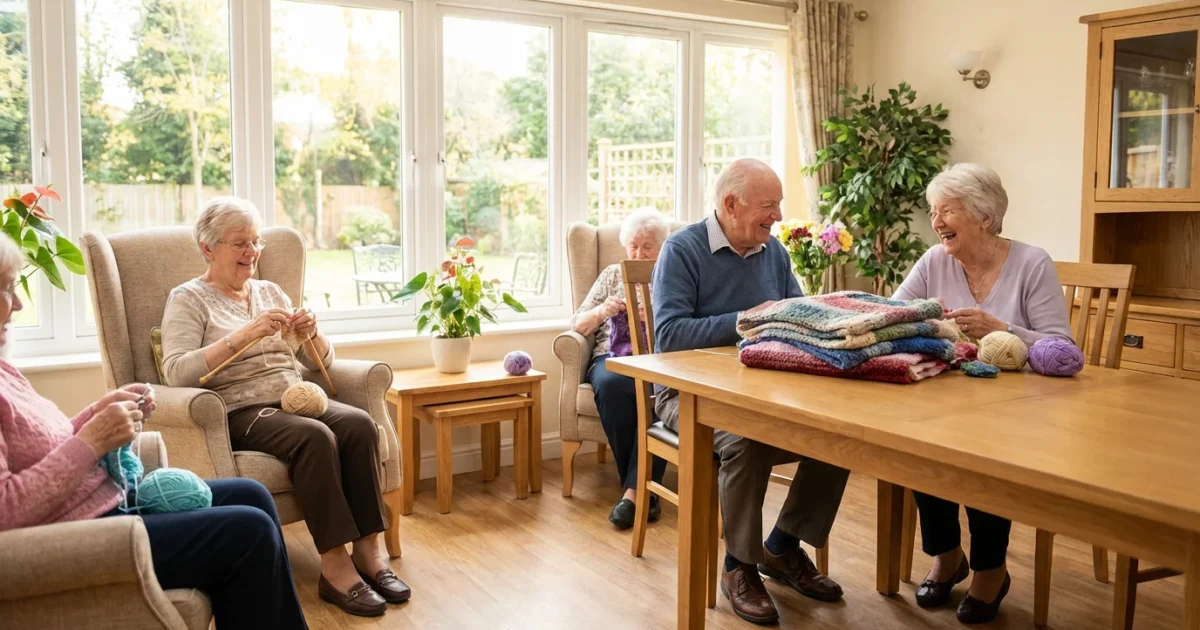
Embracing a new hobby or rediscovering an old passion enriches your life significantly. Knitting and crochet offer seniors a wonderful pathway to creativity, relaxation, and connection. These fiber arts provide practical benefits and a sense of accomplishment, whether you are new to retirement with newfound free time or a seasoned enthusiast seeking fresh inspiration.
If you are looking for other outdoor activities to complement these indoor crafts, consider birdwatching for beginners as another peaceful way to spend your time.
Many individuals find immense joy in the rhythmic motion of needles and hooks. You create beautiful, functional items while engaging your mind and hands. This guide helps you begin your journey into the delightful world of knitting and crochet, providing practical advice and inspiring possibilities.
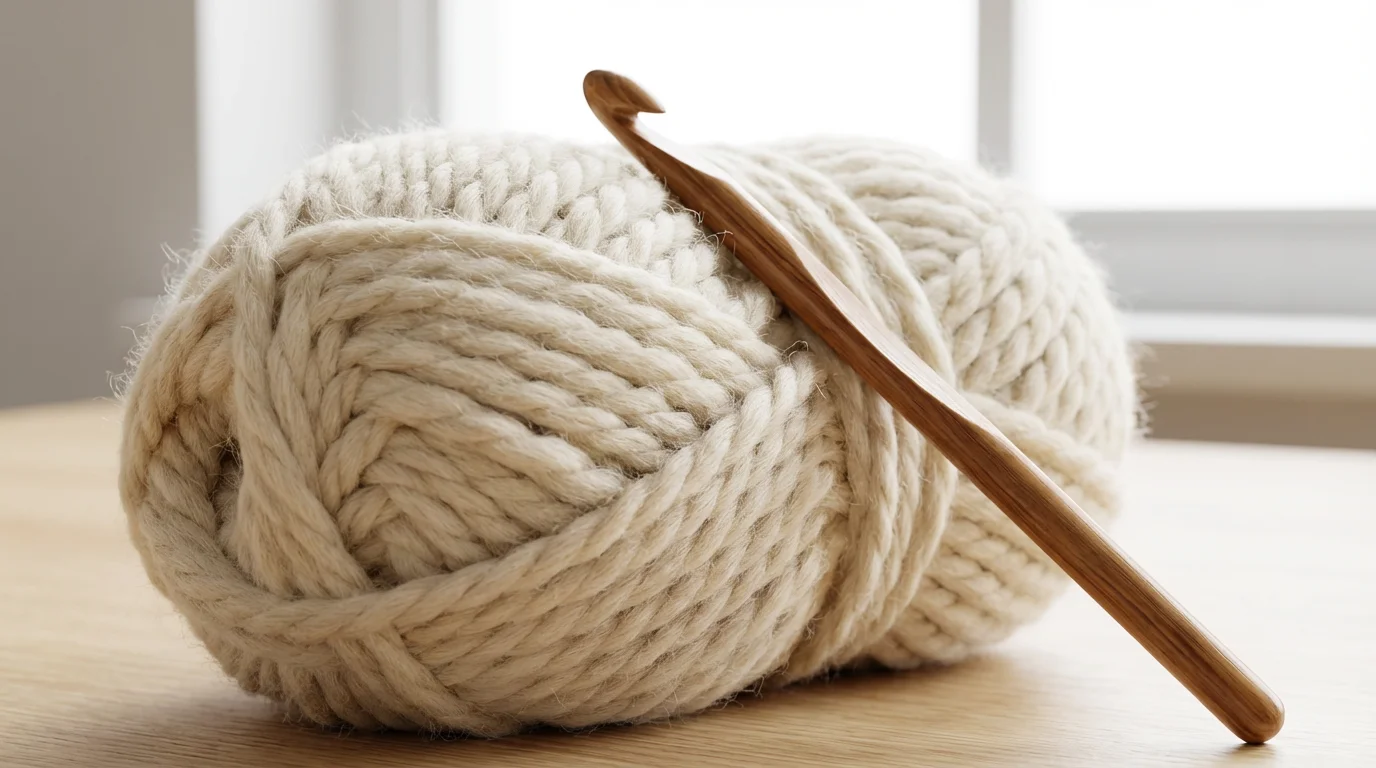
Unraveling the Benefits of Knitting and Crochet
Engaging in senior crafts like knitting and crochet offers a wealth of advantages extending beyond simply creating items. These activities provide significant mental, physical, and social benefits. They enrich your daily life and contribute to overall well-being.
Mental and Emotional Well-being
The repetitive motion of knitting and crochet acts as a natural stress reliever. It helps quiet the mind, similar to meditation. You focus on the stitches, which can reduce feelings of anxiety and promote a sense of calm.
- **Stress Reduction:** The rhythmic action of forming stitches lowers heart rate and blood pressure, creating a meditative state.
- **Cognitive Boost:** Following patterns, counting stitches, and planning projects challenge your brain. This mental exercise improves memory, concentration, and problem-solving skills.
- **Sense of Accomplishment:** Completing a project, from a simple scarf to a complex blanket, provides immense satisfaction. This boosts self-esteem and confidence.
- **Mindfulness:** Focusing on the present moment as you work with yarn and needles or hooks enhances mindfulness. This practice helps you stay engaged and reduces distractions.
Physical Advantages
While often seen as a sedentary hobby, knitting and crochet offer valuable physical benefits, particularly for dexterity and coordination.
- **Improved Fine Motor Skills:** Manipulating small needles or hooks and delicate yarn enhances finger dexterity and hand-eye coordination. This benefits overall hand health.
- **Joint Flexibility:** Regular, gentle movement of the fingers and wrists can help maintain flexibility in arthritic hands. It also reduces stiffness.
- **Pain Management:** Focusing on your craft distracts from chronic pain, acting as a natural form of pain diversion. Many report less discomfort while engrossed in their projects.
Social Connections
Knitting and crochet often bring people together, fostering valuable social interactions and friendships.
- **Community Building:** Joining local crafting groups or online forums connects you with like-minded individuals. You share tips, patterns, and camaraderie.
- **Sharing Skills:** Teaching others how to start knitting or crochet strengthens bonds. It also reinforces your own understanding of the craft.
- **Gift Giving:** Creating handmade gifts allows you to share your talent and thoughtfulness with loved ones. These personal items hold deep sentimental value.
Choosing Your Craft: Knitting vs. Crochet
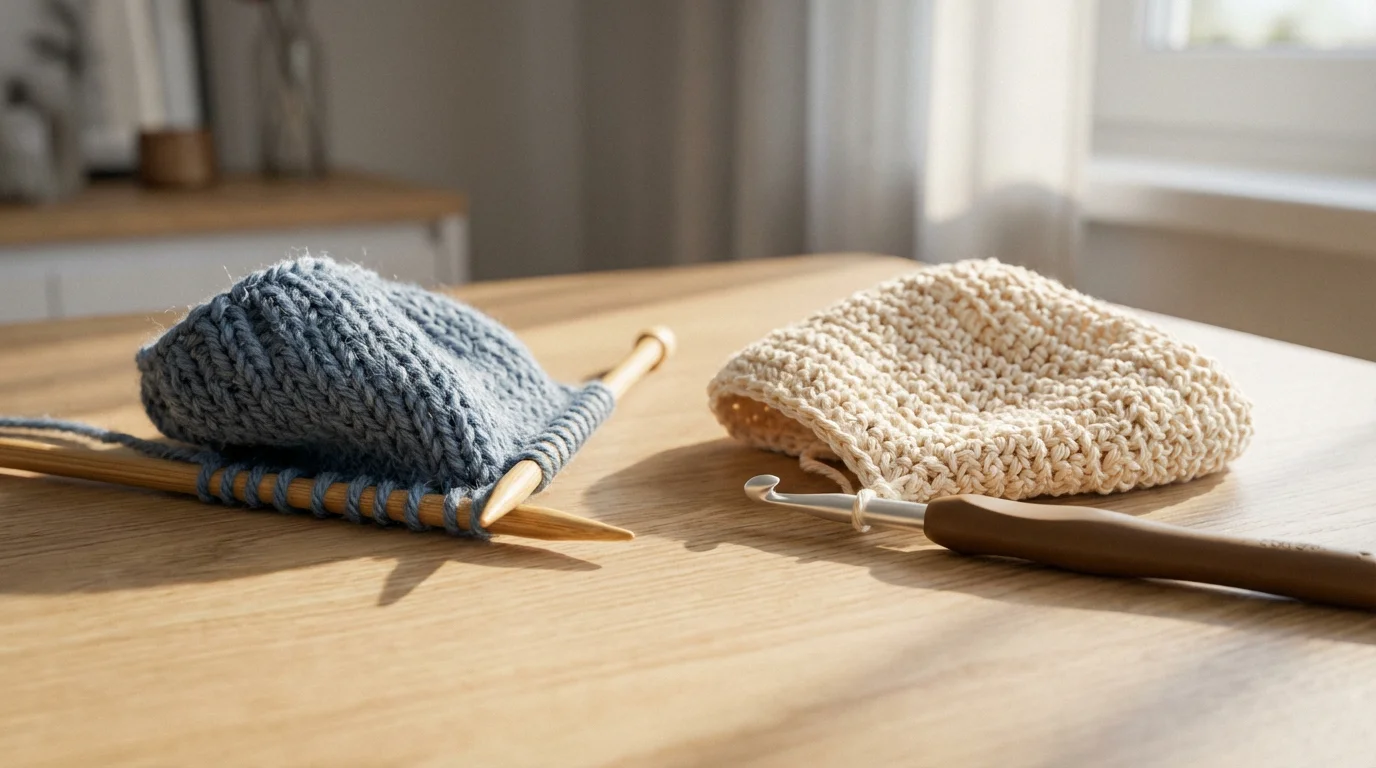
You may wonder whether to try knitting or crochet first. Both are fantastic senior crafts, but they use different tools and techniques. Understanding their distinctions helps you decide which suits you best.
Just as you might switch between crafts, you can also challenge your mind by learning a new language, which offers similar cognitive benefits.
Knitting
Knitting involves two needles to create loops of yarn that interlock. This forms a fabric. You typically hold multiple stitches on your needles at once.
- **Tools:** Two knitting needles (straight, circular, or double-pointed) and yarn.
- **Fabric Appearance:** Creates a smooth, cohesive fabric with a V-shaped stitch pattern. It offers more drape and stretch.
- **Common Projects:** Sweaters, socks, hats, scarves, blankets, shawls.
- **Learning Curve:** Some beginners find coordinating two needles and managing multiple stitches initially challenging. However, basic stitches are simple to master.
Crochet
Crochet uses a single hook to create stitches by looping yarn directly through previous loops. You typically only work with one loop on your hook at a time.
- **Tools:** One crochet hook and yarn.
- **Fabric Appearance:** Creates a denser, often thicker fabric with a more textured, knot-like appearance. It has less stretch and more structure.
- **Common Projects:** Amigurumi (stuffed toys), blankets, dishcloths, granny squares, baskets, intricate lace.
- **Learning Curve:** Many beginners find crochet easier to pick up. You manage only one active loop. It is less prone to unraveling if you drop a stitch.
Consider trying both to see which feels more natural to your hands and style. Many crafters enjoy both disciplines, switching between them based on the project.
Getting Started: What You Need
Starting these hobbies requires minimal investment. You can find all necessary supplies at local craft stores, yarn shops, or online retailers. Focus on basic, affordable items to begin.
Setting up a dedicated crafting space is easier when you apply the same principles used for creating an ergonomic home office to ensure your posture remains supported.
Essential Knitting Supplies
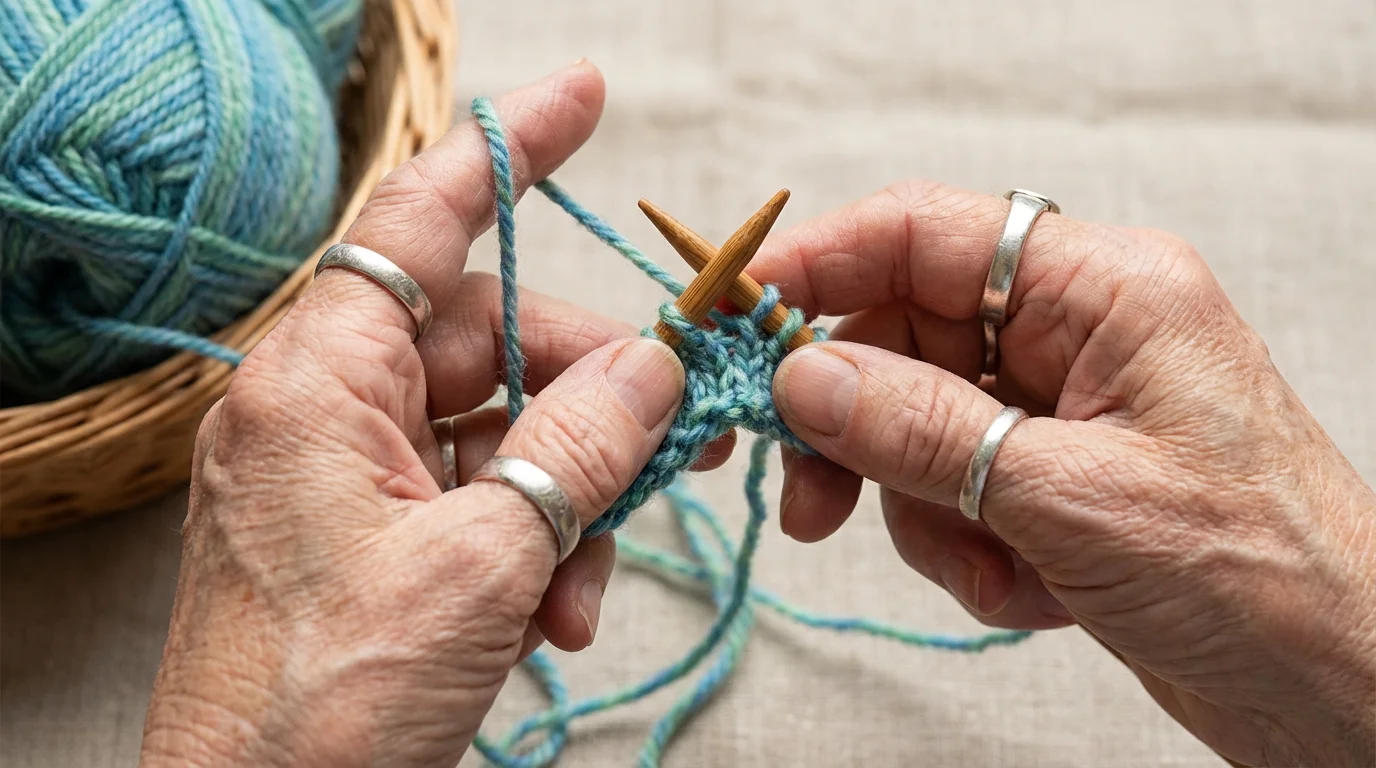
- **Yarn:** Choose a smooth, light-colored worsted-weight (medium) acrylic or wool blend yarn. Avoid novelty yarns or very dark colors for your first projects, as they hide stitches.
- **Knitting Needles:** Select a pair of straight knitting needles appropriate for your yarn. For worsted-weight yarn, size US 8 (5.0 mm) or US 9 (5.5 mm) is a common starting point.
- **Scissors:** A small pair for cutting yarn.
- **Tapestry Needle:** A large-eyed blunt needle for weaving in yarn ends.
- **Stitch Markers (Optional but Helpful):** Small clips or loops that help you keep track of stitches.
Essential Crochet Supplies
- **Yarn:** Similar to knitting, opt for a smooth, light-colored worsted-weight acrylic or wool blend yarn.
- **Crochet Hook:** Choose a hook size that corresponds to your yarn. For worsted-weight yarn, a G-6 (4.0 mm) or H-8 (5.0 mm) hook is typically recommended.
- **Scissors:** For cutting yarn.
- **Tapestry Needle:** For weaving in yarn ends.
- **Stitch Markers (Optional but Helpful):** Useful for marking the beginning of rounds or specific stitches.
Learning to Knit: Your First Stitches
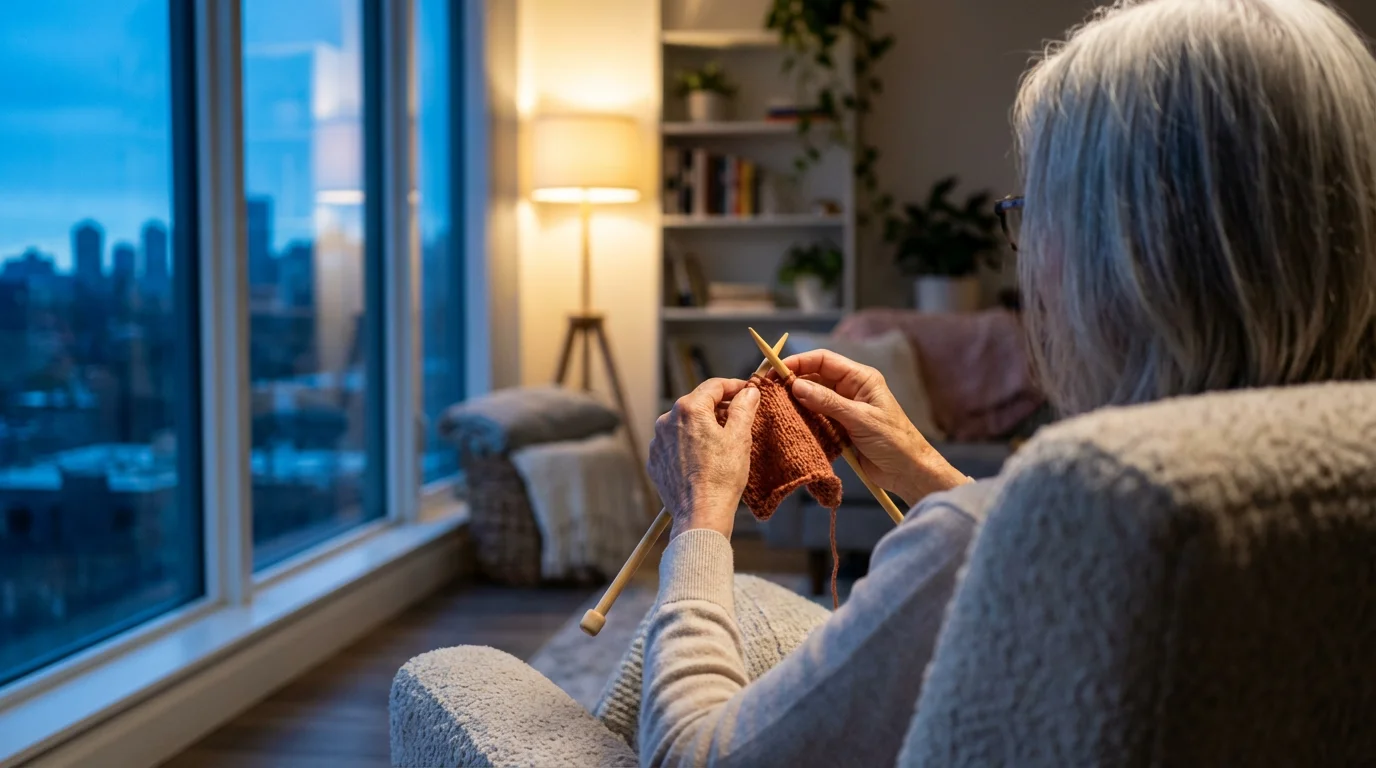
Learning how to start knitting or crochet requires patience and practice. Focus on mastering a few fundamental techniques first. You will quickly build confidence.
Beyond fiber arts, there are many other online learning resources that offer free courses for seniors interested in expanding their skill sets.
Basic Knitting Steps
Most knitting projects start with casting on, then involve the knit and purl stitches. These three form the foundation of almost all knitting.
- **Casting On:** This creates the initial row of stitches on your needle.
- Hold one needle in your right hand.
- Make a slip knot on the needle.
- Use the long-tail cast-on method, looping yarn around your thumb and index finger to create new stitches.
- Aim for about 20-30 stitches for a practice swatch.
- **The Knit Stitch:** This is the most basic stitch, forming the “V” shape in stockinette stitch.
- Hold the needle with cast-on stitches in your left hand.
- Insert your right needle into the first stitch on the left needle from left to right.
- Wrap the yarn around the right needle.
- Pull the yarn through the stitch, creating a new loop on the right needle.
- Slip the old stitch off the left needle. Repeat across the row.
- **The Purl Stitch:** The purl stitch is the reverse of the knit stitch, creating a bump on the fabric surface.
- Hold the needle with stitches in your left hand.
- Insert your right needle into the first stitch on the left needle from right to left, coming from the front.
- Wrap the yarn around the right needle.
- Pull the yarn through, creating a new loop on the right needle.
- Slip the old stitch off the left needle. Repeat across the row.
- **Binding Off:** This secures your stitches at the end of a project, preventing unraveling.
- Knit two stitches.
- Insert the left needle into the first knitted stitch on the right needle.
- Lift that stitch over the second stitch and off the needle. One stitch remains on the right needle.
- Knit another stitch, then repeat the lift-over process until only one stitch remains.
- Cut the yarn and pull the tail through the last loop to secure it.
Learning Resources
Numerous resources help you learn. YouTube offers countless free video tutorials demonstrating each stitch clearly. Many local yarn stores offer beginner classes, providing hands-on guidance. Books and online pattern databases also provide step-by-step instructions.
Mastering Crochet: Basic Techniques
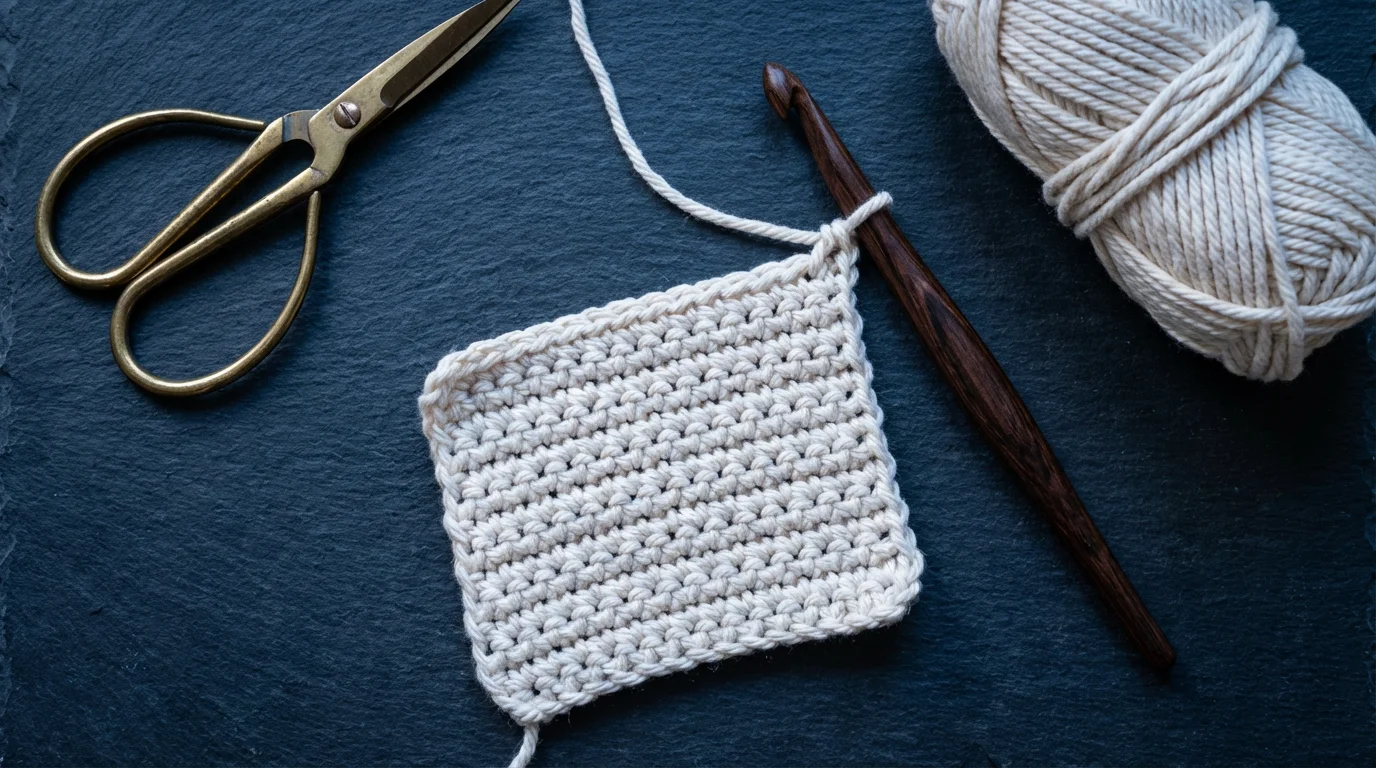
Crochet also begins with fundamental stitches that unlock a world of creative possibilities. Once you master a few basics, you can combine them in endless ways.
To watch patterns and video tutorials clearly, choosing the right tablet provides the perfect portable screen for following along from your favorite chair.
Basic Crochet Steps
The slip knot, chain stitch, and single crochet form the foundation for many crochet projects. You will quickly advance to more complex stitches.
- **Slip Knot:** This creates the initial loop on your hook.
- Wrap the yarn around your fingers to form a loop.
- Insert your hook into the loop, catch the working yarn, and pull it through.
- Pull the ends to tighten the knot onto the hook without making it too tight.
- **Chain Stitch (ch):** This forms the foundation chain for most crochet projects.
- Yarn over (wrap the yarn around your hook).
- Pull the yarn through the loop on your hook. This creates one chain stitch.
- Repeat this motion to create a chain of desired length, about 20-30 stitches for a practice swatch.
- **Single Crochet (sc):** This is a basic, compact stitch that creates a dense fabric.
- Insert your hook into the second chain from the hook.
- Yarn over and pull a loop through the chain (two loops on your hook).
- Yarn over again and pull through both loops on your hook. One single crochet stitch made.
- Repeat across your chain.
- **Double Crochet (dc):** A taller stitch than single crochet, creating a looser fabric.
- Yarn over.
- Insert your hook into the designated stitch.
- Yarn over and pull a loop through the stitch (three loops on your hook).
- Yarn over and pull through the first two loops (two loops remain).
- Yarn over and pull through the remaining two loops. One double crochet stitch made.
- **Finishing Off:** Securing your work so it does not unravel.
- Cut the yarn, leaving a tail of about six inches.
- Yarn over and pull the tail completely through the last loop on your hook, tightening it.
- Use a tapestry needle to weave in the loose ends securely into your project.
Learning Resources
Similar to knitting, plenty of resources exist for learning crochet. Online video tutorials, especially from platforms like YouTube, are excellent for visual learners. Craftsy and other online learning sites offer structured courses. Many community centers and local craft stores also host beginner crochet classes, connecting you with instructors and fellow learners.
Beyond the Basics: Expanding Your Skills
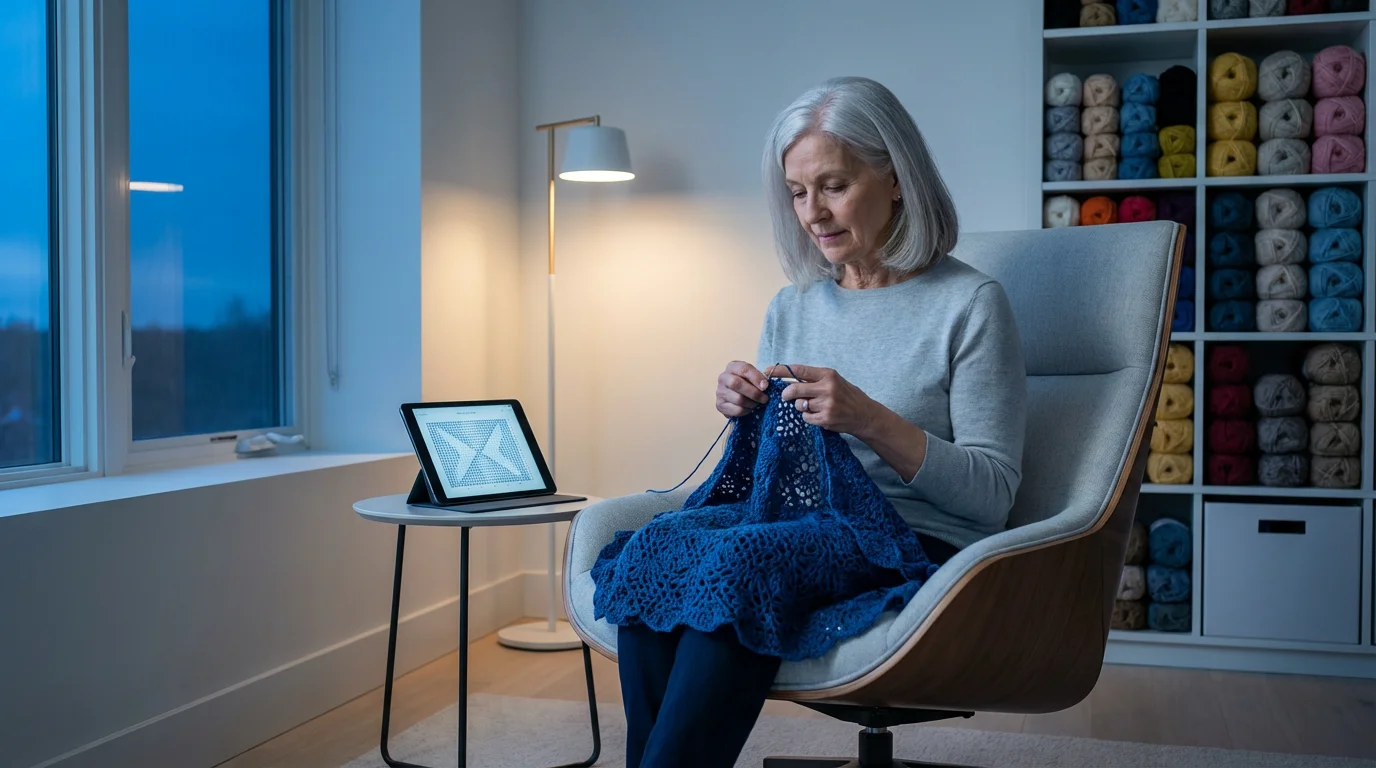
Once you feel comfortable with the basic stitches, you can explore more complex patterns and techniques. This expands your creative repertoire and allows for more intricate projects.
Intermediate Knitting Techniques
- **Ribbing:** Creates an elastic fabric, perfect for hat brims and cuffs (alternating knit and purl stitches).
- **Cables:** Decorative raised patterns formed by crossing groups of stitches.
- **Lace:** Openwork patterns created using yarn overs and decreases.
- **Colorwork:** Incorporating multiple yarn colors to create stripes, fair isle, or intarsia designs.
- **Knitting in the Round:** Using circular or double-pointed needles to create seamless tubes (e.g., hats, socks).
Intermediate Crochet Techniques
- **Granny Squares:** Iconic crocheted squares used to build blankets, bags, and garments.
- **Amigurumi:** The Japanese art of crocheting small stuffed creatures.
- **Texture Stitches:** Bobbles, popcorn stitches, and front/back post stitches add dimension.
- **Colorwork:** Changing colors within rows or creating elaborate mosaic patterns.
- **Filet Crochet:** Creating openwork designs using chains and double crochets, often resembling lace.
Project Ideas for Continued Learning
Start with simple projects that introduce new techniques without overwhelming you.
- **Knitting:**
- Garter stitch washcloth (introduces knitting flat, simple edges)
- Basic ribbed hat (introduces ribbing, knitting in the round)
- Simple cabled scarf (introduces cables)
- **Crochet:**
- Simple dishcloths (practice single and double crochet rows)
- Granny square coaster or blanket square (introduces working in the round, joining)
- Beginner amigurumi pattern (introduces working in spirals, shaping)
Remember, practice makes perfect. Do not fear making mistakes; they are part of the learning process. You can always unravel your work and try again.
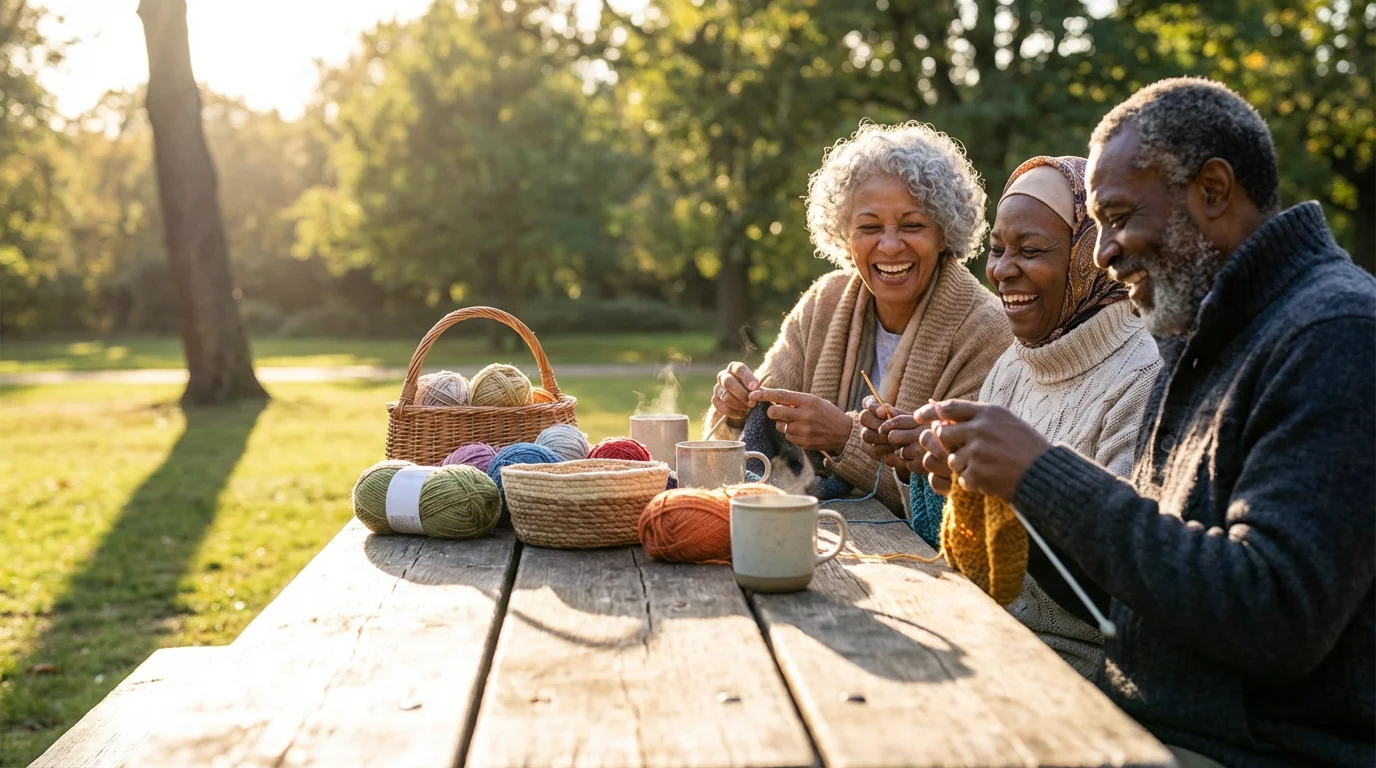
Finding Your Fiber Community
One of the most rewarding aspects of knitting and crochet is the sense of community they foster. Connecting with other crafters offers support, inspiration, and friendship.
Local Groups and Classes
Many communities have dedicated spaces where crafters gather. These include:
- **Local Yarn Stores (LYS):** Often host “knit nights” or “crochet-alongs.” They provide a welcoming environment to work on projects and ask questions.
- **Community Centers:** Many offer classes for various skill levels, from absolute beginner to advanced.
- **Libraries:** Libraries frequently host free crafting clubs or workshops.
- **Senior Centers:** These are excellent places to find crafting groups tailored for seniors, often offering shared space and resources.
These groups offer invaluable support, pattern suggestions, and troubleshooting assistance. You meet new people and form lasting friendships based on shared interests.
Online Resources and Communities
The internet provides a vast network for fiber artists. You can connect with crafters worldwide.
- **Ravelry:** A comprehensive online database for patterns, yarn, and a vibrant community forum. You can search for projects, connect with designers, and track your stash.
- **Facebook Groups:** Many groups focus on specific crafts, techniques, or even regional crafting.
- **YouTube and Instagram:** These platforms offer endless visual inspiration, tutorials, and a peek into other crafters’ projects.
- **Blogs and Websites:** Numerous blogs dedicated to knitting and crochet provide free patterns, tips, and personal stories.
These online platforms are particularly beneficial if local options are limited. They provide continuous access to new ideas and a supportive community.
Knitting and Crochet for Good: Charitable Crafting
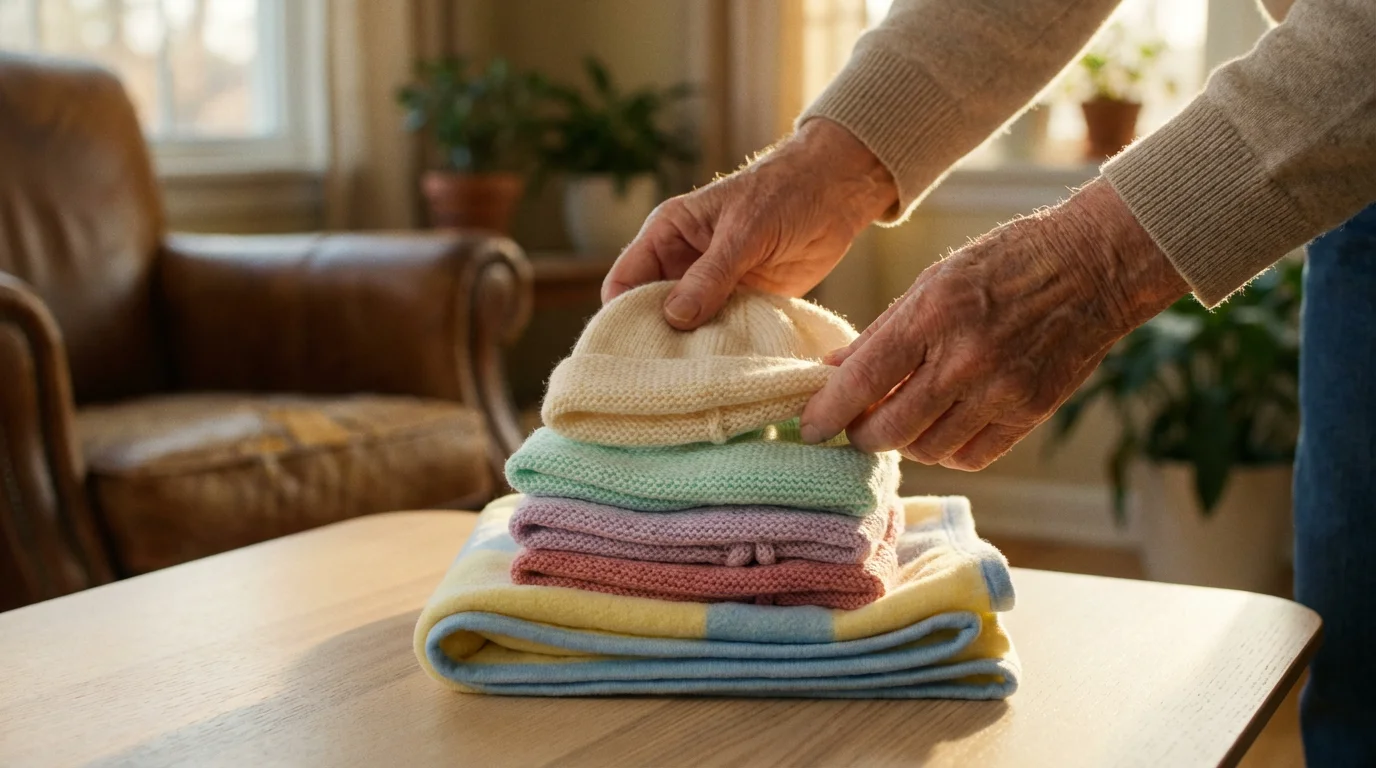
Your crafting skills can also make a meaningful difference in the lives of others. Many organizations welcome handmade donations, providing warmth and comfort to those in need.
Ideas for Charitable Projects
- **Baby Items:** Knit or crochet blankets, hats, and booties for local hospitals, neonatal intensive care units (NICUs), or shelters. These provide comfort to newborns and their families.
- **Warmth for the Homeless:** Scarves, hats, and mittens are always in high demand during colder months. Donate to homeless shelters or outreach programs.
- **Chemo Caps:** Soft, comfortable hats provide warmth and dignity to individuals undergoing chemotherapy. Many hospitals and cancer support centers accept these.
- **Pet Blankets:** Animal shelters often appreciate small, soft blankets for their furry residents.
- **Comfort Dolls/Amigurumi:** Crocheted or knitted dolls can bring joy to children in hospitals or crisis situations.
Finding Organizations
Contact your local hospitals, senior centers, or community outreach programs to inquire about their needs. Many national organizations also accept handmade donations. A quick online search for “charity knitting” or “charity crochet” in your area reveals numerous opportunities.
Contributing your time and talent to these causes amplifies the joy of your hobby. It adds a profound sense of purpose and helps you connect with your community in a unique way. Engaging in charitable crafting proves that your hands create not just beautiful objects, but also meaningful connections and significant impact.
Frequently Asked Questions
Is knitting or crochet better for beginners?
Many beginners find crochet slightly easier to learn initially. You only manage one loop on your hook at a time, making it simpler to correct mistakes or pick up dropped stitches. Knitting, with its two needles and multiple active stitches, can feel a bit more coordinated at first. However, both crafts are very approachable, and learning resources are abundant for both.
What are the benefits of knitting or crochet for seniors?
Knitting and crochet offer numerous benefits for seniors. They provide cognitive stimulation, improving memory, concentration, and problem-solving skills. The repetitive motion reduces stress and anxiety, promoting relaxation. Physically, these crafts enhance fine motor skills, dexterity, and hand-eye coordination. Socially, they foster community through crafting groups and shared interests, combating isolation. You also gain a strong sense of accomplishment from creating tangible items.
What type of yarn should I start with?
For beginners, choose a smooth, light-colored worsted-weight (medium) yarn made of acrylic or a wool blend. Acrylic is affordable, durable, and easy to care for. Light colors make it easier to see your stitches, which is crucial when learning. Avoid novelty yarns (fuzzy, bumpy), very dark colors, or extremely thin or thick yarns initially, as they can be challenging to work with and obscure stitch definition.
How do I find patterns to use?
You can find patterns in many places. Local yarn stores often have free patterns or inexpensive booklets. Online resources like Ravelry are excellent databases where you can filter by skill level, yarn type, and project. Many crafting blogs and websites offer free patterns with detailed instructions. Beginner-friendly books and kits also include patterns designed specifically for new crafters. Look for patterns labeled “beginner” or “easy” to start.
Can I still knit or crochet if I have arthritis?
Absolutely. Many individuals with arthritis continue to enjoy knitting and crochet. Using ergonomic hooks or needles with comfortable grips can reduce strain. Choose thicker yarn and larger needles or hooks, as they require less fine motor control. Taking frequent breaks and performing gentle hand stretches also helps. The gentle, repetitive motion can actually help maintain joint flexibility and reduce stiffness for some people, and the mental engagement can distract from discomfort. Consult your doctor or an occupational therapist for personalized advice on adapting your craft.
Disclaimer: This article is for informational purposes only. Travel conditions, prices, and policies change frequently. We encourage readers to verify current information directly with travel providers, check travel advisories, and consult with healthcare providers about any health concerns before traveling.

Leave a Reply