

Maintaining independence and mobility plays a vital role in your overall well-being as you age. Sometimes, a little extra support makes all the difference in keeping you active and confident. Choosing the right walking aid can significantly enhance your stability, prevent falls, and allow you to continue participating in the activities you enjoy. This guide helps you navigate the options, ensuring you select the best assistive device for your needs.
Remaining active through the use of walking aids is also a critical component for those managing diabetes to maintain healthy circulation.

Understanding the Benefits of Mobility Assistance
Walking aids provide crucial support, making daily activities safer and more manageable. Many seniors find these assistive devices indispensable for maintaining their quality of life. They address common challenges such as balance issues, weakness, and pain.
Supporting your physical strength through healthy eating habits can further enhance the benefits of using a mobility aid.
The benefits extend beyond mere physical support. Using a walking aid can significantly boost your confidence. It empowers you to move more freely, reducing the fear of falling that often limits activity. This increased activity, in turn, contributes to better overall physical and mental health.
Consider these key advantages of incorporating a walking aid into your life:
- Enhanced Stability: Walking aids provide a wider base of support, significantly improving your balance. This reduces your risk of stumbles and falls.
- Reduced Pain: By offloading weight from painful joints or injured areas, a walking aid can alleviate discomfort. You can move more comfortably and for longer periods.
- Increased Endurance: With added support, you expend less energy to walk. This allows you to cover greater distances and stay active longer without becoming overly fatigued.
- Greater Independence: A walking aid helps you perform daily tasks and participate in social activities more independently. You maintain your autonomy.
- Fall Prevention: Falls represent a leading cause of injury among seniors. The CDC reports that over 36 million falls occur among older adults each year, resulting in more than 32,000 deaths. Proper use of walking aids significantly lowers this risk.
Embracing a walking aid represents a proactive step towards better health and greater freedom. It is not a sign of weakness, but rather a smart choice for long-term well-being.
Exploring Types of Walking Aids: Canes, Walkers, and Rollators
The market offers a variety of walking aids, each designed for different levels of support and mobility needs. Understanding the distinctions helps you pinpoint the best option. Your healthcare provider or physical therapist plays a key role in recommending the most suitable device.
While selecting a device, remember that regular home upkeep is necessary to ensure your surroundings are safe for mobility equipment.
Canes: Light Support for Mild Imbalances
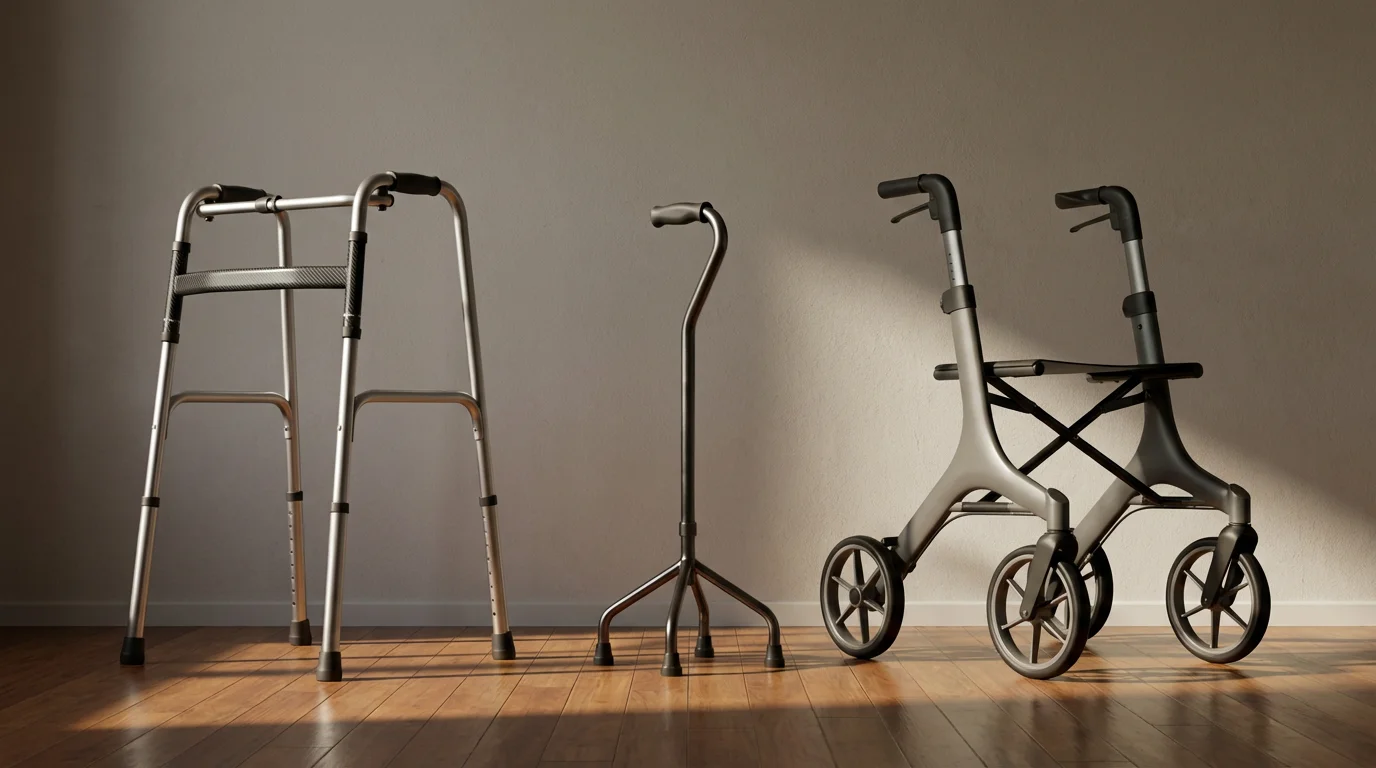
Canes offer the least amount of support among walking aids. They generally suit individuals needing minimal assistance with balance or those experiencing slight weakness on one side of the body. Canes can help widen your base of support, providing a point of contact for stability.
Types of canes include:
- Single-Point Canes: These are the most common type, featuring a single rubber tip at the bottom. They work well for minor balance issues or to offload a small amount of weight from one leg.
- Offset Canes: An offset cane features a handle that is centered over the shaft, providing more stability and comfort compared to a straight cane. The handgrip aligns directly above the cane’s base.
- Quad Canes: Quad canes have four small feet at the base, offering a wider and more stable foundation than single-point canes. They come in small-base and large-base versions, with large-base quad canes providing maximum stability. Quad canes are ideal for those needing more support than a single-point cane but not the full stability of a walker.
- Folding Canes: These canes collapse into smaller sections, making them easy to transport and store. They offer convenience for occasional use or travel.
Walkers: Enhanced Stability for Greater Needs
Walkers provide more stability than canes because they offer a four-point base of support. They are ideal for individuals needing significant assistance with balance, those recovering from surgery, or those with generalized weakness. A standard walker requires you to lift it and move it forward with each step, which provides maximal stability but can be slower.
Types of walkers include:
- Standard Walkers: These lightweight frames have rubber tips on all four legs. You lift and place the walker forward before taking steps. They offer excellent stability but can be tiring for long distances.
- Two-Wheeled Walkers (Front-Wheeled Walkers): These walkers feature wheels on the front two legs and glides or rubber tips on the back two. They offer a good balance of stability and ease of movement, as you do not need to lift the entire device.
- Hemi-Walkers: Designed for individuals who can only use one hand or arm due to a stroke or injury. A hemi-walker provides a wider base of support than a quad cane, resembling half of a standard walker.
Rollators: Mobility and Convenience with Wheels
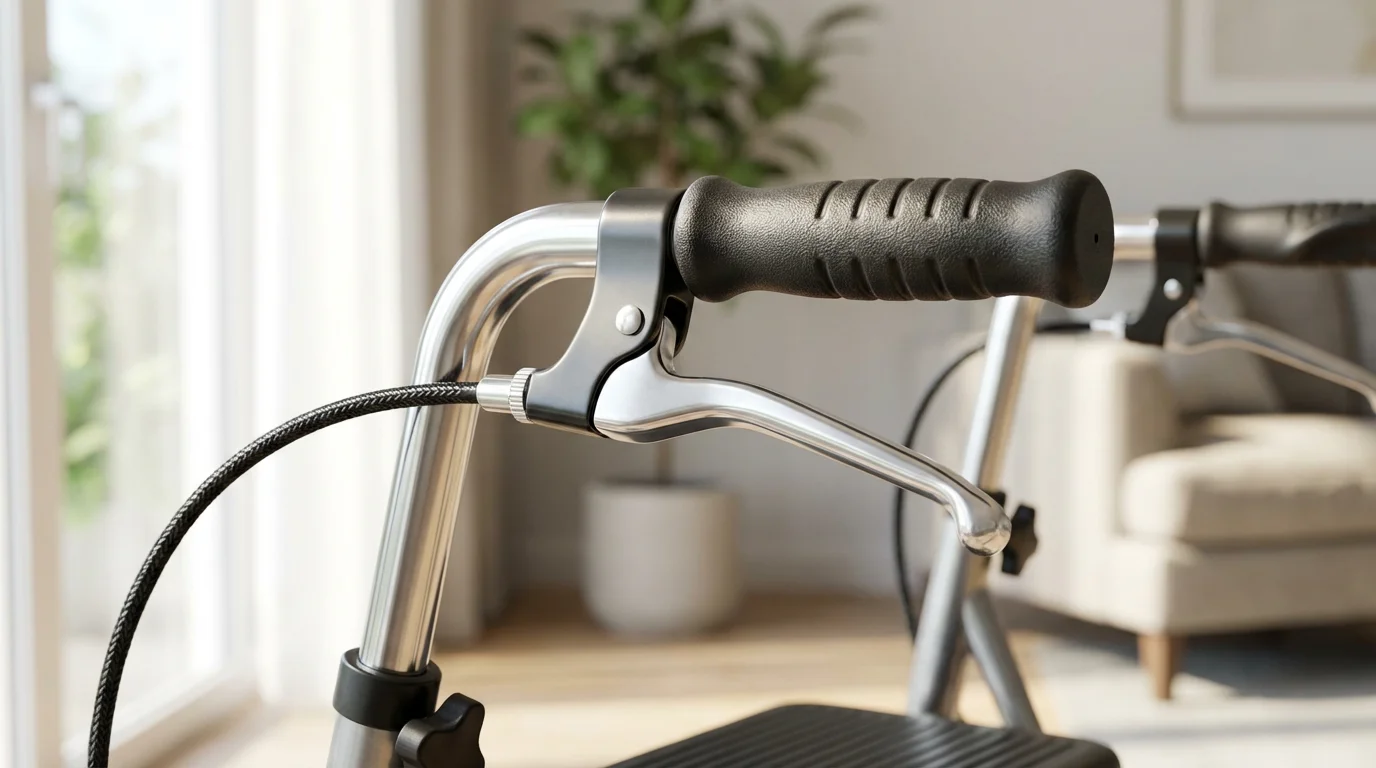
Rollators are walkers equipped with wheels on all four legs, usually featuring hand brakes and often a seat with a storage pouch. They suit individuals who need walking support but can maintain a continuous walking pattern. Rollators allow for smoother, faster movement compared to standard walkers.
Types of rollators include:
- Three-Wheeled Rollators: These offer good maneuverability due to their lighter weight and smaller turning radius. They are suitable for indoor use or crowded spaces but provide less stability than four-wheeled versions.
- Four-Wheeled Rollators: The most common type, providing excellent stability and often featuring a comfortable seat and backrest. These are highly versatile for both indoor and outdoor use. They are particularly beneficial if you need to rest frequently during walks.
- Heavy-Duty Rollators: Designed for larger individuals, these rollators have reinforced frames and higher weight capacities. They offer robust support and durability.
- Bariatric Rollators: Similar to heavy-duty, these are specifically designed for individuals needing broader seating and higher weight limits, ensuring both comfort and safety.
Each type of walking aid serves distinct purposes. Your choice should align with your specific mobility challenges, physical strength, and lifestyle.
How to Choose the Right Walking Aid for Your Needs
Selecting the correct assistive device involves considering several factors related to your physical condition, environment, and lifestyle. Making an informed decision ensures your safety and maximizes the benefits of the aid. Do not hesitate to involve your healthcare team in this process.
Consider also adapting your bathroom with grab bars or non-slip surfaces to complement the support of your new walking aid.
Before bringing a new walker home, consider decluttering your home to ensure there is enough space for your device to maneuver safely.
Consider these key questions when making your choice:
- What is your primary reason for needing an aid?
- Do you experience mild balance issues? A cane might suffice.
- Do you have significant balance problems, generalized weakness, or recovering from surgery? A walker offers more support.
- Can you walk continuously but need support and a place to rest? A rollator provides mobility and convenience.
- How much weight do you need to bear on the device? If you need to offload significant weight from a leg or hip, a standard walker or crutches provide more support than a cane.
- What is your living environment like?
- Do you have narrow hallways or small rooms? A cane or a three-wheeled rollator might navigate better.
- Do you primarily walk outdoors on uneven terrain? A sturdy four-wheeled rollator with larger wheels could be more appropriate.
- Do you need to fold your device for travel or storage? Many canes, walkers, and rollators offer folding options.
- What is your upper body strength and coordination?
- Operating a rollator with brakes requires good hand-eye coordination and sufficient grip strength.
- Lifting a standard walker requires some upper body strength.
- Do you need a place to sit or carry items? Rollators often come with seats and storage baskets, offering convenience for errands or longer outings.
- What is your overall endurance level? If you tire easily, a rollator allows you to rest frequently, promoting longer periods of activity.
MedlinePlus offers extensive resources on choosing appropriate mobility aids. Remember, the best walking aid is one you use consistently and correctly, which feels stable and comfortable.
Getting the Perfect Fit and Learning Proper Technique
An improperly fitted walking aid can be more dangerous than no aid at all. It can lead to poor posture, increased fall risk, and discomfort. Proper adjustment ensures the device supports your body effectively. Learning the correct technique is equally important for safe and efficient use.
Proper technique is vital, but so is monitoring your medications to ensure side effects like dizziness don’t compromise your stability.
Ensuring the Right Fit:
Here are general guidelines for fitting:
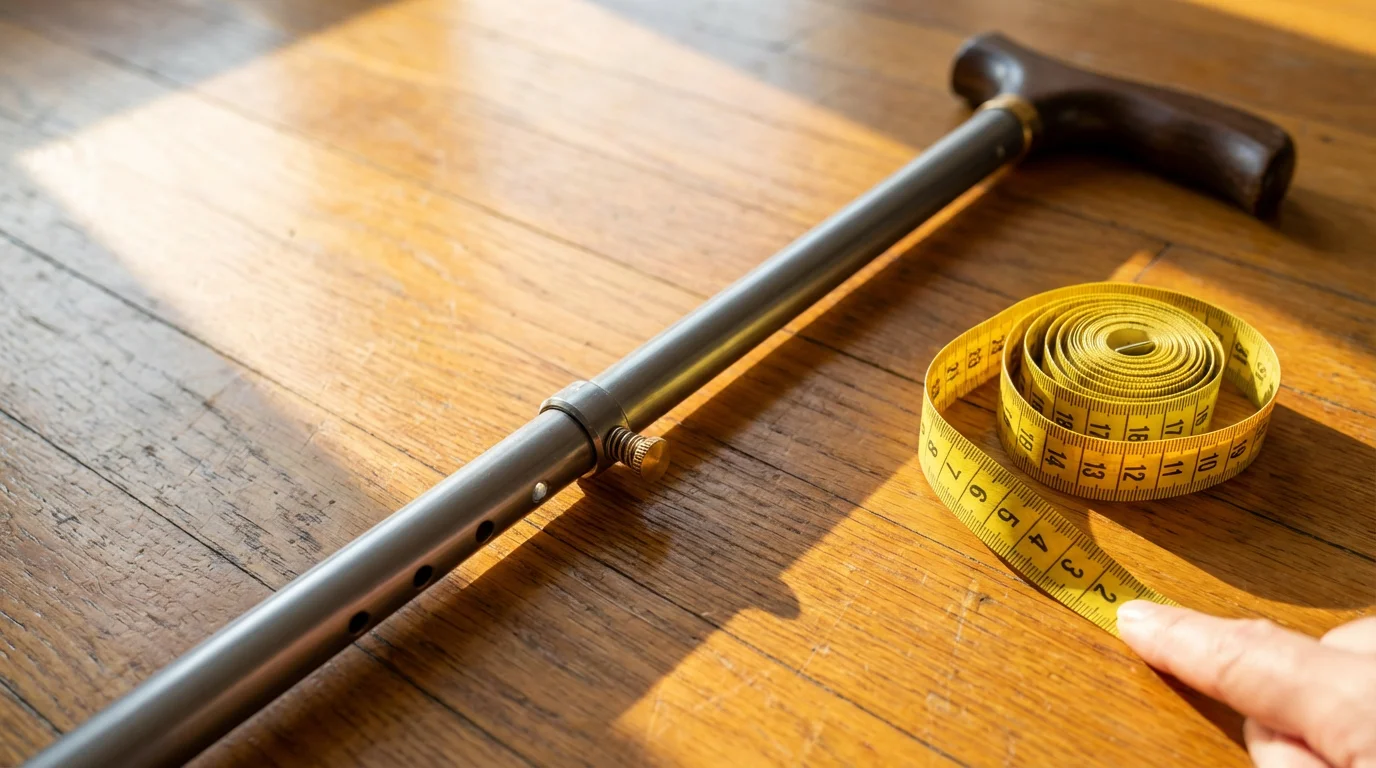
- Cane Height: Stand upright with your arm relaxed at your side. The top of the cane handle should reach the crease of your wrist. When you grip the handle, your elbow should have a slight bend, approximately 15 to 20 degrees.
- Walker Height: Stand inside the walker with your arms relaxed at your sides. The handgrips should align with the crease of your wrists. When you place your hands on the grips, your elbows should bend slightly.
- Rollator Height: Similar to walkers, the handgrips should be at wrist height when your arms hang loosely, allowing for a slight elbow bend when you grip them. Ensure the seat height is comfortable for sitting and standing.
Always have a physical therapist or another healthcare professional verify the fit. They can make precise adjustments and confirm the device matches your biomechanics.
Mastering Proper Technique:
Correct usage prevents injuries and maximizes stability.
- Using a Cane:
- Hold the cane in the hand opposite your weaker or injured leg.
- Move the cane forward with your weaker leg.
- Step through with your stronger leg.
- Keep your body upright, avoiding leaning heavily on the cane.
- Using a Standard Walker:
- Lift the walker and move it about one step ahead of you.
- Step into the walker with your weaker leg first.
- Follow with your stronger leg.
- Keep your feet within the walker’s frame.
- Using a Rollator:
- Push the rollator slightly ahead of you.
- Walk into it, keeping your body centered between the handgrips.
- Maintain a smooth, continuous walking pattern.
- Use the brakes when stopping or sitting down.
Your physical therapist can provide personalized training, demonstrating how to use your specific walking aid safely on various surfaces and around obstacles. This training is invaluable for building confidence and preventing falls.
Maintaining Your Walking Aid for Safety and Longevity
Regular maintenance ensures your walking aid remains safe and effective. Neglecting your device can lead to breakdowns, instability, and an increased risk of falls. A few simple checks can extend the life of your aid and keep you secure.
Follow these essential maintenance tips:
- Inspect Rubber Tips/Wheels Regularly: Check cane tips, walker glides, and rollator wheels for wear and tear. Worn-out rubber tips lose their grip, increasing slip hazards. Worn wheels can make steering difficult or unstable. Replace them promptly when they show signs of significant wear.
- Check for Loose Parts: Periodically examine all screws, bolts, and fasteners. Tighten any loose components to prevent wobbling or unexpected collapses. This is especially important for folding mechanisms on canes and walkers.
- Test Brakes on Rollators: Ensure the hand brakes on your rollator engage smoothly and hold firmly. Adjust them if they feel loose or do not provide adequate stopping power. If you cannot adjust them yourself, seek professional assistance.
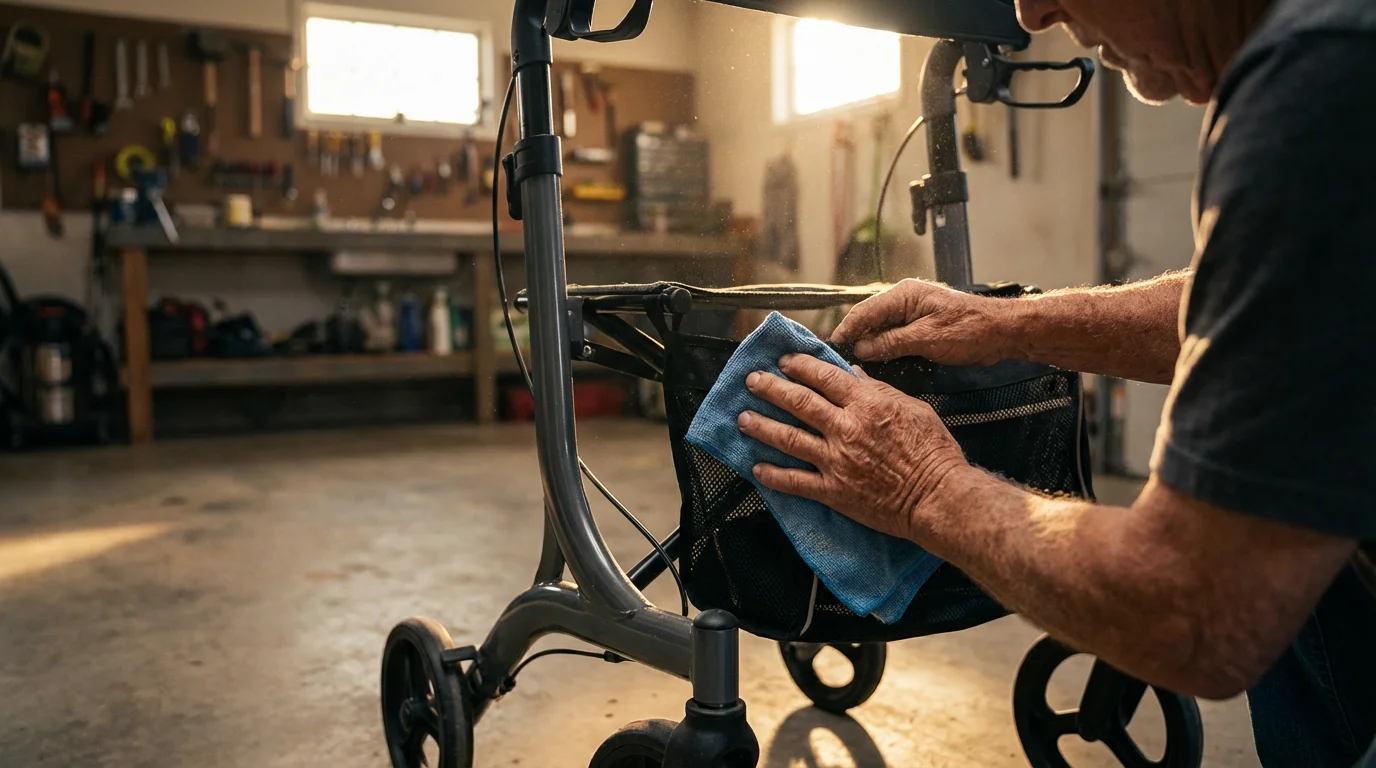
- Clean Your Aid: Wipe down the frame and handgrips regularly with a damp cloth and mild soap. This maintains hygiene and prevents the buildup of dirt or grime, which can affect grip or function.
- Inspect for Cracks or Bends: Look for any signs of structural damage, such as cracks in the frame or bent tubing. Even small damage can compromise the integrity of the device. If you find any, consider replacing the aid or having it professionally repaired.
- Store Properly: When not in use, store your walking aid in a clean, dry place. Avoid leaving it in direct sunlight or extreme temperatures, which can degrade materials over time.
Proactive maintenance protects your investment and, more importantly, your safety. Make these checks a regular part of your routine.

Common Mistakes to Avoid When Using An Assistive Device
Even with the right walking aid, incorrect usage can lead to falls or discomfort. Being aware of common pitfalls helps you use your device safely and effectively. Avoid these mistakes to maximize your mobility and minimize risks.
In addition to physical aids, many seniors find that smart home devices like voice-activated lights can help prevent trips during the night.
Be mindful of these common errors:
- Using an Improperly Fitted Aid: As discussed, incorrect height leads to poor posture, back pain, and instability. An aid too high forces you to reach, while one too low causes you to stoop.
- Leaning Too Heavily on the Aid: While walking aids provide support, you should not put all your weight on them. Over-reliance can weaken your legs and core muscles over time, counteracting the goal of improved mobility.
- Placing the Aid Too Far Ahead: Pushing your walker or rollator too far forward creates an unstable gap between you and the device. This increases your risk of falling forward. Keep the aid just one comfortable step ahead.
- Not Looking Ahead: Focus your gaze forward, not down at your feet or the aid. Looking ahead helps you anticipate obstacles and maintain natural balance. Scan your path regularly.
- Ignoring Worn-Out Tips or Wheels: Using an aid with slick rubber tips or sticky wheels compromises traction and maneuverability. Replace these components as soon as they show wear.
- Using the Aid on Inappropriate Surfaces: While some rollators handle outdoor terrain well, standard walkers and canes can struggle on uneven ground, thick carpets, or wet surfaces. Exercise caution and consider environmental limitations.
- Skipping Professional Guidance: Attempting to self-teach proper technique can lead to bad habits. A physical therapist provides expert training and personalized adjustments.
- Using an Aid Not Suited for Your Condition: Trying to manage significant balance issues with just a cane when a walker is needed is a common mistake. Be honest about your support needs.
By avoiding these common errors, you can ensure your walking aid serves its purpose effectively, keeping you safe and active.

When to Consult Your Healthcare Provider About Walking Aids
Making decisions about your health and mobility should always involve your healthcare team. They possess the expertise to assess your specific needs and recommend the safest, most effective solutions. Do not wait for a fall or significant difficulty to seek professional advice.
Consult your doctor or a physical therapist if you experience any of the following:
- New or Worsening Balance Issues: If you find yourself frequently losing your balance or feeling unsteady, even for short distances, it signals a need for evaluation.
- Increased Fear of Falling: A pervasive fear of falling can significantly restrict your activity. Your healthcare provider can help address this and determine if a walking aid would offer reassurance and stability.
- Persistent Pain While Walking: If walking causes ongoing pain in your joints, back, or legs, a walking aid may help offload weight and reduce discomfort.
- Recovery from Surgery or Injury: After an operation or an injury to your lower body, a walking aid is often crucial for safe rehabilitation and weight-bearing restrictions.
- Generalized Weakness or Fatigue: If you experience overall weakness or become easily fatigued during daily tasks, a walking aid can conserve energy and improve endurance.
- Difficulty with Daily Activities: If you struggle with tasks such as standing from a chair, getting out of bed, or walking short distances, a mobility aid may be beneficial.
- Considering a Change in Your Current Aid: If your current cane feels insufficient, or your walker is becoming too cumbersome, discuss upgrading or changing your device with a professional.
- Medicare Coverage Questions: For guidance on what Medicare covers regarding durable medical equipment (DME), including walking aids, your doctor can provide a prescription, which is typically required for coverage. The National Council on Aging (NCOA) also provides resources on financial assistance for seniors.
Your healthcare provider can perform a comprehensive assessment, including gait analysis and strength testing, to recommend the most appropriate walking aid and provide a prescription if needed. They ensure the device fits your body and your unique health profile.

Adapting Your Home Environment for Enhanced Safety
Even with the perfect walking aid, your home environment can present hazards. Making simple modifications to your living space can significantly reduce the risk of falls and improve your ability to move safely and independently. Proactive adjustments complement the use of any assistive device.
Beyond clearing hallways, adapting your bathroom with grab bars and non-slip surfaces is a critical step in creating a truly accessible home.
Implement these practical home safety adaptations:
- Remove Tripping Hazards: Clear pathways of clutter, loose rugs, electrical cords, and anything else that could cause you to trip. Secure or remove throw rugs.
- Improve Lighting: Ensure all areas of your home are well-lit, especially hallways, staircases, and bathrooms. Use night lights in bedrooms and bathrooms for nighttime navigation.
- Install Grab Bars: Place grab bars in the bathroom, particularly near the toilet and in the shower or tub. These provide crucial support for transfers and reduce the risk of slips.
- Add Handrails: Install sturdy handrails on both sides of staircases. This offers continuous support when navigating steps.
- Ensure Stable Furniture: Make sure chairs, tables, and other furniture are stable and do not slide easily. Avoid using furniture for support if it is not secure.
- Optimize Floor Surfaces: If possible, opt for non-slip flooring. Address uneven surfaces or thresholds that could impede your walking aid.
- Rearrange for Accessibility: Keep frequently used items within easy reach to minimize bending and reaching. Create clear, wide pathways for your walking aid.
- Consider a Shower Chair or Bench: A shower chair can make bathing safer and less tiring, especially if standing for extended periods is difficult.
AARP offers a wealth of resources on home modifications for aging in place, providing further guidance on creating a safer environment. These adjustments, combined with your walking aid, foster a truly safe and accessible home.
Frequently Asked Questions
Navigating the world of walking aids often brings questions about coverage, selection, and practical use. We address some common concerns here to provide you with clear, helpful answers.
Does Medicare cover the cost of walking aids?
Medicare Part B often covers durable medical equipment (DME), which includes canes, walkers, and rollators, when a doctor prescribes them for use in your home. You typically pay 20% of the Medicare-approved amount, and the Part B deductible applies. Ensure your doctor and the supplier accept Medicare assignment to maximize your benefits. Check Medicare.gov for detailed coverage specifics.
How do I know if I need a walking aid?
Consider a walking aid if you experience unsteadiness, fear of falling, balance issues, pain when walking, or reduced mobility due to injury or a medical condition. You might notice yourself reaching for furniture or walls for support. Consulting your doctor or a physical therapist provides the best assessment. They can evaluate your balance, strength, and gait to recommend the most appropriate device.
What is the difference between a walker and a rollator?
A standard walker has four legs with rubber tips and requires you to lift and move it forward with each step, offering maximum stability. A rollator, conversely, has wheels on its legs and often includes hand brakes and a seat. Rollators suit individuals who need support but can walk more continuously, valuing the convenience of wheels and a resting spot. Walkers provide more support for those with significant balance challenges.
Can I use a walking aid on stairs?
Generally, using walkers or rollators on stairs is unsafe and not recommended. Canes can sometimes be used on stairs, but this requires specific technique and practice with a physical therapist to ensure safety. For navigating stairs, consider installing handrails, using a stairlift, or asking for assistance. Prioritize safety over attempting to maneuver a device on stairs alone.
How do I ensure my walking aid is properly fitted?
Proper fitting is crucial for safety and effectiveness. When standing upright with a cane, your elbow should have a slight bend of 15 to 20 degrees when holding the handle, and the top of the cane should reach your wrist crease. For walkers, your elbows should also bend slightly, and the handgrips should align with your wrist crease when your arms hang loosely. Always have a healthcare professional or physical therapist confirm the fit.
Take care of your body. It’s the only place you have to live.
Choosing the right walking aid significantly impacts your ability to live an active, independent life. It is an investment in your safety and well-being. By understanding the different types of walking aids, recognizing your specific needs, and seeking professional guidance, you empower yourself to make the best choice. Remember, using a walking aid is a proactive step towards maintaining your mobility and enjoying all that life offers.
Disclaimer: This article is for informational purposes only and does not constitute medical advice. The information provided is not intended to diagnose, treat, cure, or prevent any disease. Always consult with your healthcare provider before making any changes to your diet, exercise routine, medications, or health regimen. If you’re experiencing a medical emergency, call 911 immediately.









Leave a Reply